
Corporate gifting sounds simple until someone asks, “What exactly are we sending, to who, and when?” Then it turns into a hundred tiny decisions. The easiest way to avoid awkward surprises is to agree on a short list of non-negotiables before anyone places an order.
This guide is written for Australian teams buying corporate gift hampers for clients, staff, suppliers, or partners. It is question-led on purpose. Because the fastest way to align stakeholders is to answer the right questions in the right order.
What is the purpose of the corporate gift hampers?
They should agree on the goal first, because the purpose decides the budget, message, and what goes inside. If they skip this, they usually end up with something generic that pleases nobody.
Common purposes in Australia are client retention, settlement gifts, staff recognition, Christmas campaigns, and conference follow-ups. A settlement gift in Brisbane needs a different tone than a staff thank you in Perth. Same product, totally different context.
Who exactly are the recipients, and how clean is the list?
They should lock down the recipient list early, including names, roles, and delivery addresses. Bad lists create returned parcels, wrong names on cards, and wasted spend.
For corporate gift hampers, the list also affects the contents. A VIP client tier might justify premium Australian wine, while a broader prospect list might need a lighter hamper that still feels thoughtful. They should also confirm whether any recipients are in regional areas where couriers can be slower.
What budget per hamper is approved, and what is included in that figure?
They should agree on a per unit budget range and what it covers, in plain terms. That means product value, VAT, custom branding, insert cards, packing, and delivery.
With corporate gift hampers, “£120 each” can quietly become £165 once branded sleeves, express shipping, and printed cards are added. Someone should own the final landed cost. Otherwise finance will ask later, and nobody will enjoy that conversation.
What delivery date matters, and how much lead time is realistic in Australia?
They should agree on the arrival window, not just the dispatch date. In Australia, metro Sydney and Melbourne can be fast, but regional NSW, WA, and NT routes can blow out during peak seasons.
If they are sending corporate gift hampers around Christmas, EOFY, or major sales events, they should build buffer time. A safe approach is to lock the delivery week, then work backwards with the supplier on cut off dates for artwork approvals and address submission.
What items are definitely in, and what items are definitely out?
They should align on inclusions and exclusions before browsing catalogues. It saves time and reduces “can we swap this?” chaos later.
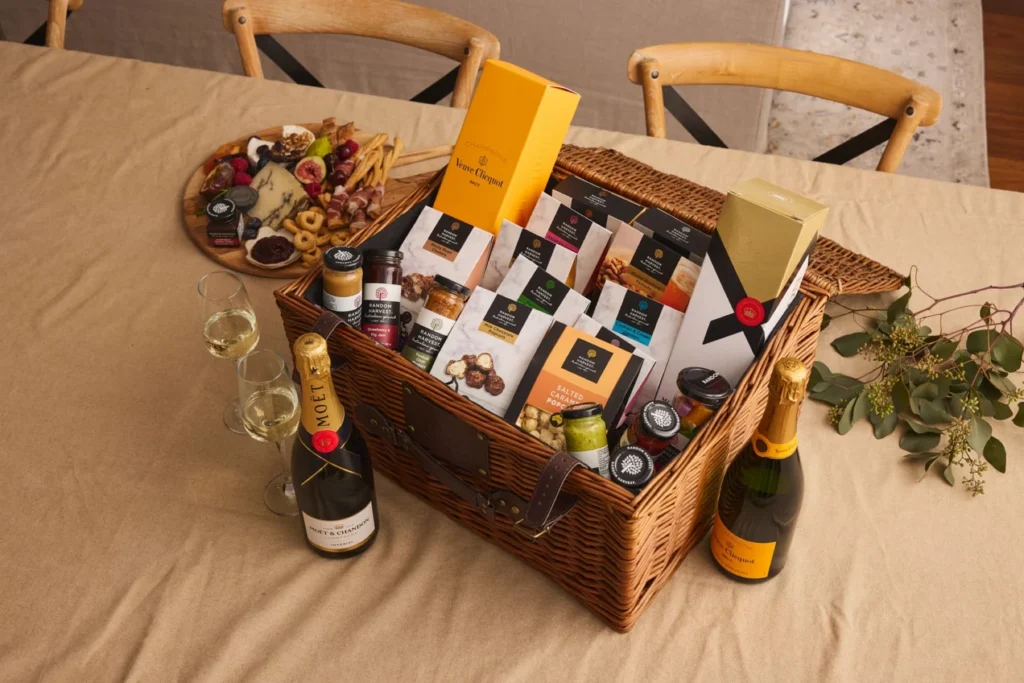
For Australian corporate gift hampers, typical inclusions are local pantry goods, premium chocolate, coffee, tea, wine, sparkling, or a non alcoholic alternative. Typical exclusions are anything fragile, overly scented items, and gimmicks that do not match the brand. If they want to include alcohol, they should decide early. It changes everything.
How will they handle dietary needs, allergies, and cultural considerations?
They should decide whether they are offering options, and how recipients will be matched to them. This should be confirmed before the order is placed, not after the hampers are packed.
For corporate gift hampers, they may need at least one alcohol-free option, plus nut-free or gluten-free where possible. They should also think about halal-friendly or vegan preferences if they are gifting to diverse teams or communities. The safest approach is to offer two or three curated variants and map recipients accordingly.
What branding is required, and what level of customisation is worth it?
They should agree whether branding is essential or optional. Too much branding can feel like a marketing parcel, not a gift.
Many Australian teams choose subtle branding for corporate gift hampers, like a sleeve, ribbon tag, or a small card with a logo. If they want fully customised boxes, they should expect longer lead times and higher minimum order quantities. They should also confirm who supplies artwork and who signs off on proofs. One person, not five.
What message will be included, and who approves the wording?
They should draft the card message early and keep it simple. The message is often the difference between “nice hamper” and “they actually meant this”.
For corporate gift hampers, they should decide if the message is individual, role-based, or fully generic. They should also confirm sign-off rules, especially for regulated industries like finance, property, or healthcare. If they are adding QR codes or promo offers, they should think twice. Gifts are not the same as campaigns.
How will addresses and personal data be collected and protected?
They should agree on a process that is secure and not messy. Spreadsheets flying around email threads are still common, and yes, they are risky.
If they are ordering corporate gift hampers for staff, they might collect addresses via an internal form with limited access. If it is clients, the account managers may already have details, but they still need a single source of truth. They should confirm how long the supplier will store address data, and whether it is deleted after fulfilment.
What packaging and presentation standards do they expect on arrival?
They should set expectations for the unboxing experience, because recipients judge the gift in the first ten seconds. If the box arrives crushed, the contents barely matter.
For Australian corporate gift hampers, they should ask about outer cartons, internal protection, and how temperature sensitive items are packed in summer. They should also confirm whether any glass is included and how it is cushioned. Photos in a catalogue are not proof of real world courier travel.
What happens if something breaks, goes missing, or arrives late?
They should agree on the supplier’s replacement policy and response times, in writing. Things go wrong. The difference is how quickly they are fixed.
With corporate gift hampers, they should confirm what counts as damaged, what proof is required, and how replacements are shipped. They should also ask if tracking is provided for every delivery, and whether failed deliveries are re-attempted. This matters a lot in apartment buildings in Sydney and Melbourne.
How will they manage split deliveries across multiple Australian locations?
They should clarify whether all hampers ship from one location or multiple, and how that affects cost and timing. It is easy to underestimate how much complexity national delivery adds.
If they are sending corporate gift hampers to offices in Adelaide, Canberra, Hobart, and Darwin, they should check the supplier’s carrier network and surcharges. They should also decide whether deliveries go to office addresses only or home addresses too. Home delivery often increases failed drop-offs unless authority to leave is set.
Are there any compliance rules or internal policies they need to follow?
They should confirm gifting limits and conflict rules before ordering, especially in government, construction, healthcare, and financial services. Some recipients cannot accept gifts over a certain value, or they must declare them.
For corporate gift hampers, they should also consider alcohol policies, especially if the recipient is a public sector contact. If there is any doubt, a premium non-alcoholic hamper is usually safer and still classy. The point is to build goodwill, not create a compliance headache.
What is the payment process, and who owns the purchase order trail?
They should agree on payment method, invoicing details, and approvals. Otherwise the order gets delayed while the supplier waits for admin steps nobody planned.
For corporate gift hampers, they should confirm whether the supplier accepts purchase orders, credit cards, or bank transfers, and whether payment is required upfront. They should also clarify the cancellation terms. If the campaign is tied to a date, they need to know the last safe day to make changes without fees.
How will they measure success, and will anyone follow up?
They should decide what “worked” means, because it is not always replies or thank you emails. Sometimes success is reduced churn, better renewals, or improved staff morale.
If they are sending corporate gift hampers to clients, they might track responses, meetings booked, renewal rates, or simple account manager feedback. For staff gifting, they might track participation, internal comments, or engagement survey notes. And yes, they should decide if anyone will follow up politely, without turning it into a sales push.
What should they confirm with the supplier before placing the final order?
They should confirm product availability, final pricing, lead time, and delivery schedule. Then they should get it all in a single written summary, even if it is just an email.
For corporate gift hampers in Australia, they should also request a final packing list, confirm any substitutions policy, and ask for photos of the exact hamper variant they will receive. If the supplier uses seasonal stock, substitutions happen. The question is whether they are controlled or random.
What is the simplest pre order checklist they can agree on?
They should keep a one page checklist and treat it like a gate. If an item is not agreed, the order does not proceed. This removes last minute opinions and keeps the team sane.
A practical checklist for corporate gift hampers could include recipient list owner, budget per unit landed, hamper variant choices, dietary variants, branding level, message copy, address collection method, delivery window, replacement policy, and payment approvals. Nothing fancy. Just clear.
Placing an order is the easy part. Agreeing on the details is what makes corporate gift hampers land well, on time, and without that sinking feeling when someone messages, “Hey, why did we send this?”
FAQs (Frequently Asked Questions)
What is the primary purpose of corporate gift hampers in Australia?
Corporate gift hampers in Australia are typically used for client retention, settlement gifts, staff recognition, Christmas campaigns, and conference follow-ups. Defining the purpose helps determine the budget, message, and hamper contents to ensure the gift resonates with recipients.
How important is it to finalise the recipient list before ordering corporate gift hampers?
Locking down an accurate recipient list early—including names, roles, and delivery addresses—is crucial. It prevents returned parcels, incorrect names on cards, and wasted expenditure. The recipient list also influences hamper contents and delivery logistics, especially for regional areas.
What factors should be considered when setting a budget for corporate gift hampers?
Agreeing on a per hamper budget should include all costs such as product value, VAT, custom branding, insert cards, packing, and delivery. For example, a stated budget of £120 might increase to £165 once additional costs like branded sleeves and express shipping are included. Clear ownership of the final landed cost avoids financial misunderstandings.
How do delivery timelines affect the distribution of corporate gift hampers in Australia?
Delivery dates should focus on the arrival window rather than just dispatch dates. While metro areas like Sydney and Melbourne have faster courier services, regional locations in NSW, WA, and NT may experience delays during peak seasons such as Christmas or EOFY. Building buffer time and coordinating cut-off dates with suppliers ensures timely delivery.
What items are typically included or excluded in Australian corporate gift hampers?
Common inclusions are local pantry goods, premium chocolate, coffee, tea, wine or sparkling beverages, and non-alcoholic alternatives. Exclusions often cover fragile items, strongly scented products, or gimmicks that don’t align with the brand. Early decisions about including alcohol are important as they impact contents and presentation.
How should dietary requirements and cultural considerations be managed when gifting corporate hampers?
It’s advisable to offer two or three curated hamper variants catering to common dietary needs such as alcohol-free options, nut-free or gluten-free items. Consideration for halal-friendly or vegan preferences is essential when gifting diverse teams or communities. Recipient preferences should be mapped before orders are placed to avoid issues.
You may also like to read How a Pineapple Donut Glaze Is Made From Scratch
